Pelvic Floor Strategies to Help You Run with More Confidence
Running should leave you feeling strong, not worried about urine leakage.
If you've ever leaked a little during a run, know this: you're far from alone. Stress urinary incontinence (SUI) affects many runners, especially postpartum athletes, women returning to exercise, and even experienced runners who have never been pregnant. The good news? Leakage while running is often treatable. It isn't something you simply have to "live with."
By addressing running mechanics, strength, breathing, and training progression, many runners can significantly reduce—or even eliminate—symptoms and get back to enjoying every mile. Here are five evidence-based strategies that can help.

1. Shorten Your Stride to Reduce Impact
One of the simplest changes you can make is shortening your stride.
When runners overstride, they create greater braking forces and higher impact with every foot strike. Those extra forces don't just affect your knees and hips. They also increase the demand placed on your pelvic floor. Instead, aim for:
- Shorter, quicker steps
- A slightly higher cadence (steps per minute)
- The same overall running pace
Even a modest increase in cadence can decrease impact forces, improve running efficiency, and reduce stress throughout the body, including the pelvic floor.
Pro Tip: Don't worry about making dramatic changes. Increasing cadence by just 5–10% is often enough to notice a difference.
2. Strengthen Your Hips for Better Pelvic Stability
Your pelvic floor doesn't work alone.
The glutes, deep hip muscles, and core all work together to stabilize your pelvis while running. If these muscles aren't doing their job, the pelvic floor often has to work overtime to compensate.
- Prioritize strengthening your:
- Gluteus maximus
- Gluteus medius
- Deep hip rotators
- Core stabilizers
Some excellent exercises include:
- Bridges
- Single-leg Romanian deadlifts
- Step-ups
- Clamshells
- Lateral band walks
Building stronger hips creates a more stable foundation, allowing the pelvic floor to work more efficiently rather than absorb unnecessary stress.

3. Improve Your Body's Ability to Absorb Impact
Running is essentially a series of controlled hops.
With every stride, your muscles and tendons absorb force, store energy, and release it again. If those tissues aren't prepared for the demands of running, the extra load often gets transferred elsewhere, including your pelvic floor.
Improving tendon strength and lower-body power helps your body manage these repetitive forces more effectively.
Include exercises like:
- Squats
- Lunges
- Calf raises
- Hopping drills
- Jump training (plyometrics)
These exercises build resilience throughout the lower body, helping to reduce the overall stress from every step.
Remember: Start gradually. Tendons adapt over time, and progressive loading is the key to long-term success.

4. Improve Your Breathing and Pressure Management
Breathing has a bigger impact on pelvic floor health than most runners realize.
Your diaphragm, abdominal muscles, and pelvic floor function as a coordinated pressure-management system. Ideally, they move together to control pressure inside your abdomen during exercise.
Problems can occur when you:
- Hold your breath
- Breathe primarily through your chest
- Have limited rib cage mobility
- Create excessive downward pressure during movement
Learning how to coordinate breathing with running and improving rib cage mobility can help distribute pressure more efficiently and reduce unnecessary strain on the pelvic floor.
A pelvic floor physical therapist can assess your breathing mechanics and teach strategies tailored specifically to your running form.

5. Progress Your Running Gradually
Your cardiovascular system isn't the only thing that adapts to training.
Your muscles, tendons, bones, and yes, your pelvic floor, need time to build tolerance to increased mileage and intensity.
One of the biggest contributors to leakage is simply progressing training too quickly.
To help your body adapt:
- Increase weekly mileage gradually
- Add speed workouts conservatively
- Schedule regular recovery days
- Pay attention to symptoms after harder runs
If leakage increases as your training ramps up, it may be your body's way of telling you it needs more time before progressing further. Listening to those signals now can help prevent bigger setbacks later.
When Should You See a Pelvic Floor Physical Therapist?
Occasional leakage isn't something you should ignore, especially if it's limiting your running or affecting your confidence.
A pelvic floor physical therapist can evaluate:
- Running mechanics
- Pelvic floor strength and coordination
- Hip and core stability
- Breathing patterns
- Pressure management
- Training progression
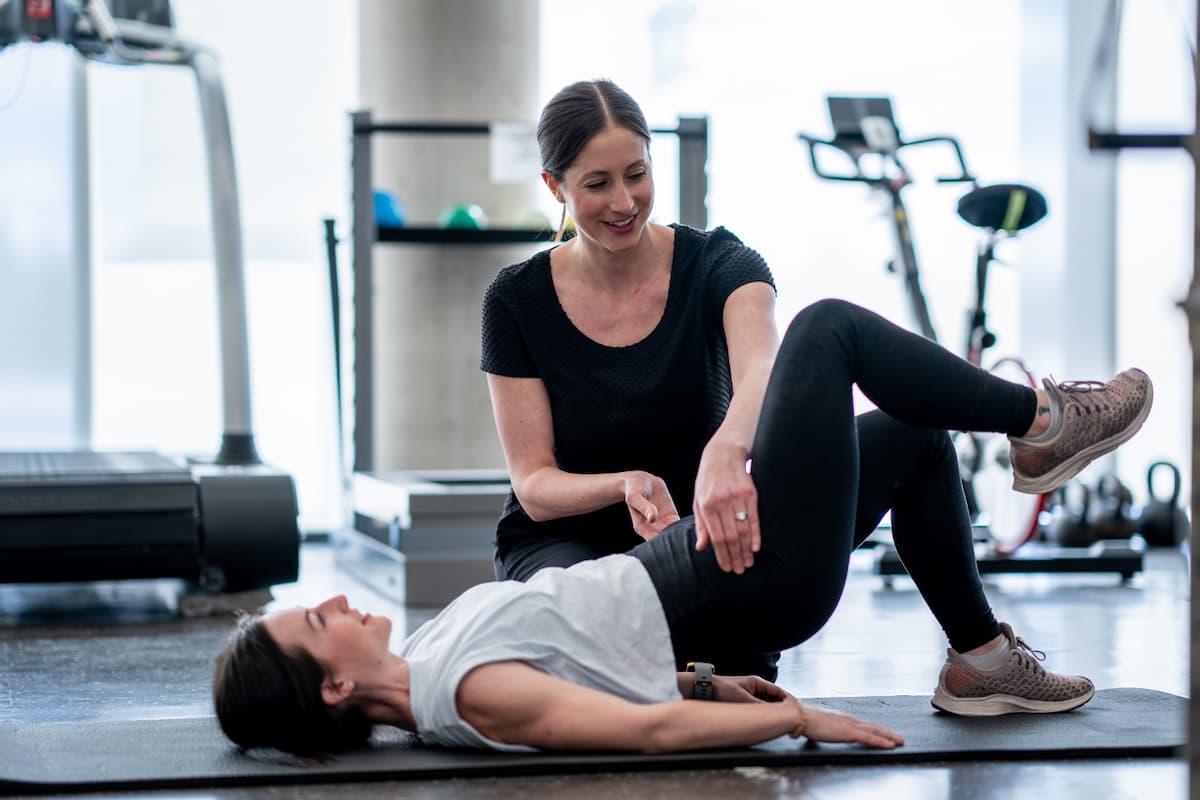
From there, they can create a personalized treatment plan designed to help you return to running without leakage.
Early intervention often leads to faster, more successful outcomes.
The Bottom Line
Leaking urine while running may be common, but it isn't something you simply have to accept.
Small adjustments to your running mechanics, strength training, breathing, and training progression can make a meaningful difference. And if symptoms persist, working with a pelvic floor physical therapist can help uncover the underlying cause and develop a plan to get you back to running with confidence.
Your goal shouldn't be running away from the problem. It should be solving it.