Running is often treated as something that should feel natural, something we just do. But in reality, running is a learned skill, shaped over time by strength, mobility, habits, and even past injuries.
Because of that, the way you run—your gait—plays a major role in how you feel, how you perform, and how likely you are to get injured.
Gait analysis is one of the most effective ways to better understand and improve movement.
What Is Gait Analysis?
At its core, gait analysis is the study of how your body moves while walking or running. It examines how different parts of your body (hips, knees, ankles, and feet) work together throughout the movement cycle.
Running can be broken down into two primary phases:
- Stance phase: when your foot is in contact with the ground.
- Swing phase: when your foot is off the ground.
Within those phases are smaller moments, like initial contact, mid-stance, and toe-off, that all influence efficiency and load on the body.
Even subtle differences in how you move through these phases can affect performance and injury risk over time.
.jpg)
Why Movement Mechanics Matter
Every step you take creates force. When your mechanics are efficient, those forces are distributed well across your body. When they're not, certain areas can take on more stress than they're built to handle.
This is often where issues begin.
Small inefficiencies, like overstriding, poor hip control, or asymmetry between sides, may not be noticeable at first. But over hundreds or thousands of steps, they can contribute to:
- Persistent joint stress
- Decreased efficiency
- Early fatigue
- Increased risk of overuse injuries
Understanding these patterns early allows for meaningful changes before they become bigger problems.
The Role of Biomechanics
Biomechanics is the foundation of gait analysis. It focuses on how your joints and muscles move and interact during activity.
Some of the most important variables include:
- Stride length: how far you travel with each step.
- Cadence: how many steps you take per minute.
- Joint angles and alignment: how your hips, knees, and ankles move.
- Ground reaction forces: how your body absorbs and produces force.
These factors directly influence what's known as the running economy: the amount of energy you use to maintain a given pace.
You can think of running economy like a car's fuel efficiency. Two runners might have similar fitness levels, but the one with better mechanics often uses less energy to achieve the same result.
What Makes 3D Gait Analysis Different?
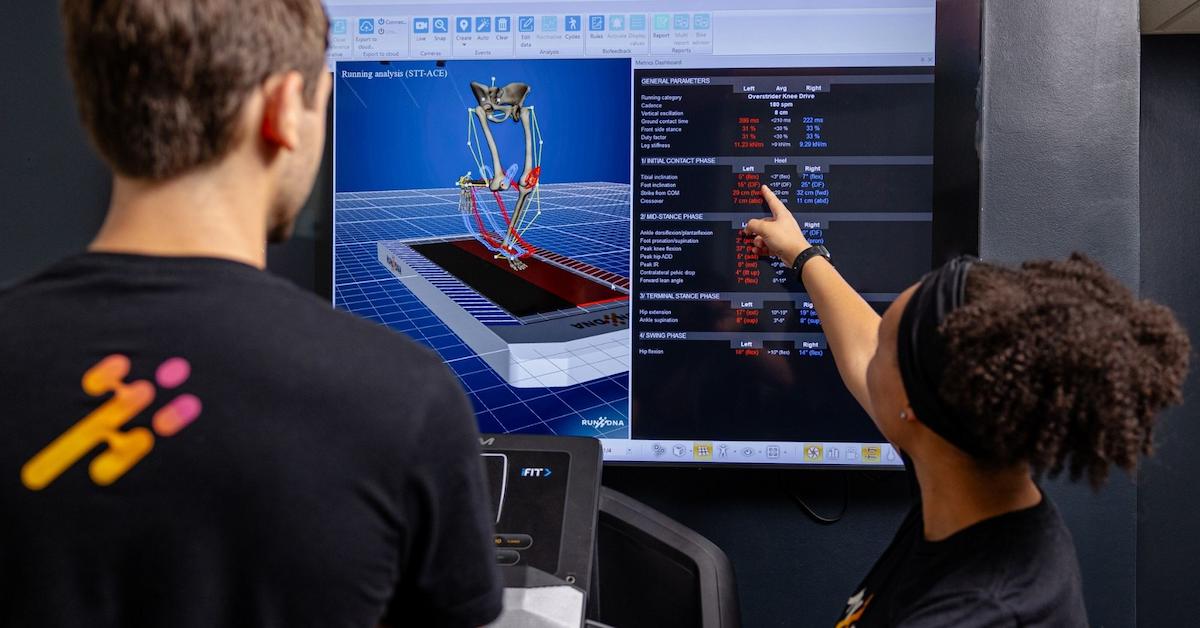
Traditional gait analysis often relies on visual observation or two-dimensional video. While helpful, these methods can miss important details, especially movements that occur outside a single plane.
Three-dimensional motion capture systems provide a more complete picture.
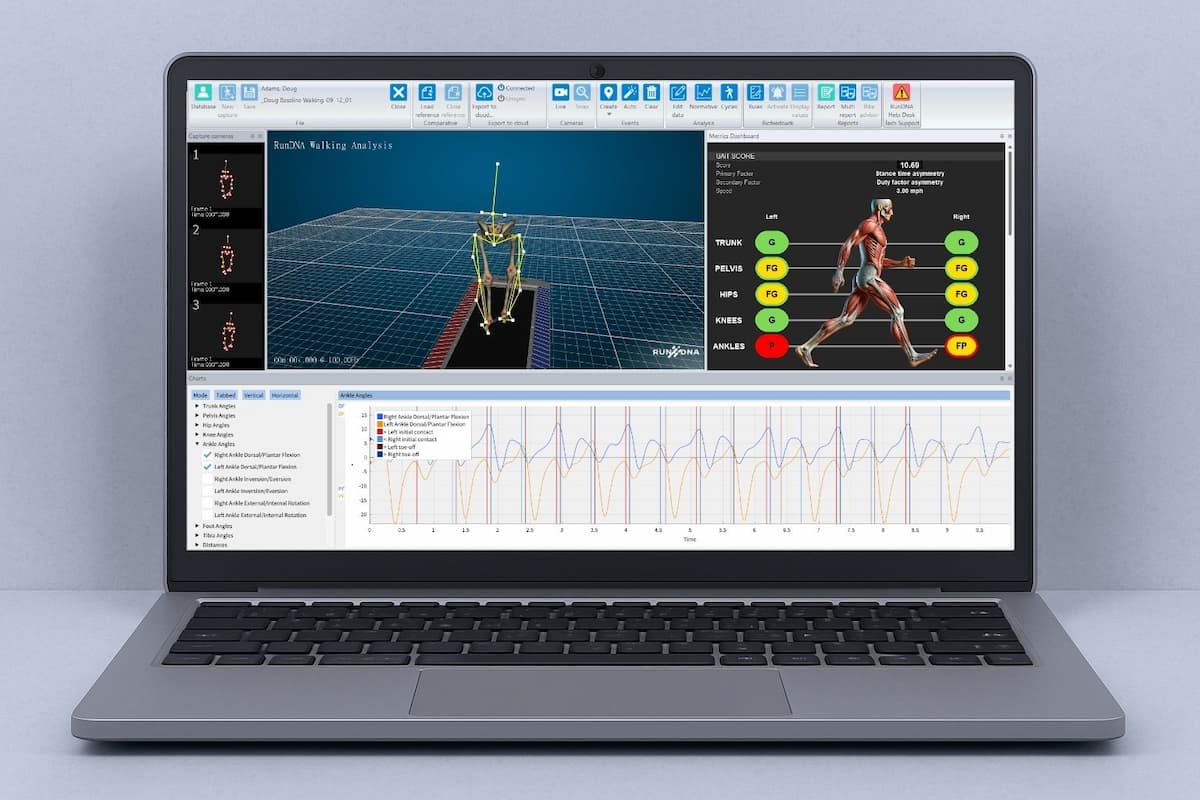
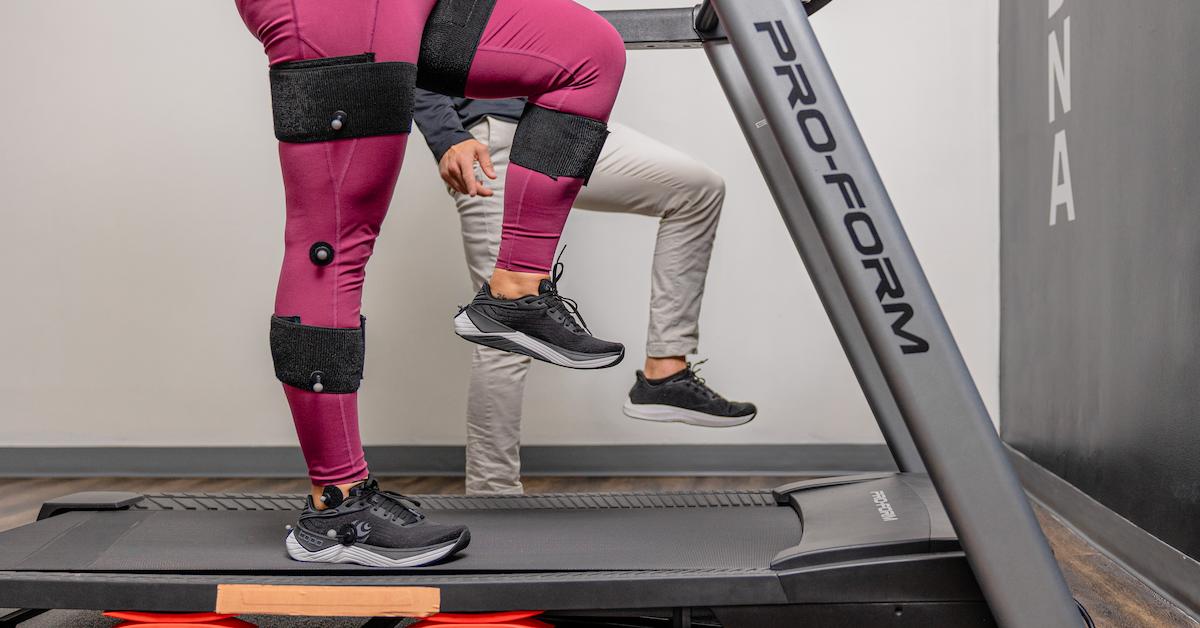
Using reflective markers and multiple cameras, systems like RunDNA capture movement in real time and build a digital model of how your body moves through space.
This allows clinicians to:
- Measure joint motion more accurately.
- Identify subtle asymmetries.
- Evaluate movement across all three planes.
- Connect movement patterns to performance or pain.
Rather than relying on estimation, it provides objective data to guide decision-making.
What Is Actually Measured?
A comprehensive gait analysis includes several layers of information:
Biomechanics (Kinematics)
This focuses on joint positions, movement patterns, and how your body moves through space.
Kinetics
This looks at the forces acting on your body, especially during ground contact.
Temporospatial Data
Metrics like cadence, stride length, and timing help track changes over time.
Pressure and Load Distribution
Often measured through specialized treadmills or sensors, helping identify how force is distributed through the foot and lower body.
Each layer adds context. Together, they provide a clearer understanding of both what is happening and why.
Common Misconceptions About Gait Analysis
"It's only for elite runners."
In reality, anyone who walks or runs can benefit. Movement quality matters at every level.
"It's all about foot strike."
Foot strike is just one variable. Whole-body mechanics are far more important.
"A quick video analysis is enough."
While helpful, simplified methods often miss key contributors higher up the chain, like hip or trunk control.
"It will fix everything immediately."
Gait analysis identifies patterns. Long-term improvement comes from applying that information through training and movement retraining.
From Data to Application
One of the most important and often overlooked parts of gait analysis is what happens after the assessment.
Data alone doesn't change movement.
Effective gait analysis should lead to:
- Targeted strength work for identified weaknesses.
- Mobility interventions where restrictions exist.
- Technique adjustments to improve efficiency.
- Gradual retraining strategies that allow changes to stick.
A runner dealing with knee pain may not have a knee problem at all. The issue could stem from hip mechanics that increase stress further down the chain.
By identifying the root cause, interventions can be more precise and more effective.
Beyond Injury: Performance and Longevity
While many people seek gait analysis after pain develops, it's just as valuable for performance.
Improving efficiency can lead to:
- Faster running with less effort
- Better endurance
- Reduced fatigue over longer distances
It can also extend the time someone can remain active without a breakdown.
.jpg)
A Local Approach to Better Movement
For runners and active individuals in Boise and Meridian, getting a deeper understanding of movement is no longer limited to labs or elite training facilities. It's available right here at Ascend Physical Therapy.
At Ascend, gait analysis isn't treated as a standalone assessment. It's integrated directly into one-on-one physical therapy sessions, where every data point is translated into a clear, personalized plan. Instead of simply identifying what's happening, the focus is on helping you understand why and what to do next.
That means targeted exercises, practical running cues, and a structured progression designed around your specific movement patterns, goals, and training demands.
It's this combination of detailed movement analysis and individualized care that leads to meaningful, lasting improvements, whether you're working through a recurring injury or looking to run more efficiently and confidently.

Understanding how you move is one of the most valuable tools for improving both performance and long-term health.
Running form doesn't need to be perfect. But it should be efficient enough to support your goals without creating unnecessary stress on your body.
Gait analysis provides a way to see what's happening beneath the surface, turning something that feels subjective into something measurable and actionable.
And in many cases, small, targeted changes can lead to meaningful improvements in how you move, feel, and perform.
Curious What Your Movement Says?
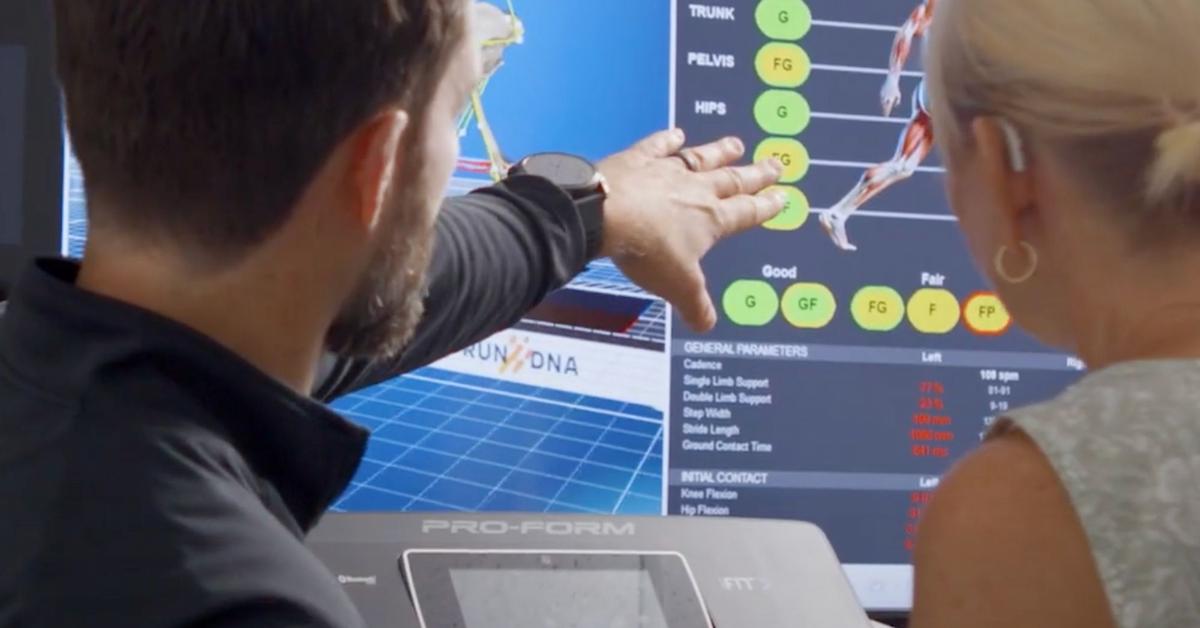
If you're a runner or simply someone looking to move better, getting a clearer picture of your mechanics can be a helpful next step.
Ascend Physical Therapy offers RunDNA's 3D gait analysis in Boise and Meridian, helping translate movement data into practical, personalized strategies.
Whether your goal is to stay injury-free, improve efficiency, or get back to doing what you enjoy without pain, understanding your movement is a strong place to start.
Book Your RunDNA Session Call Now to Get Started